

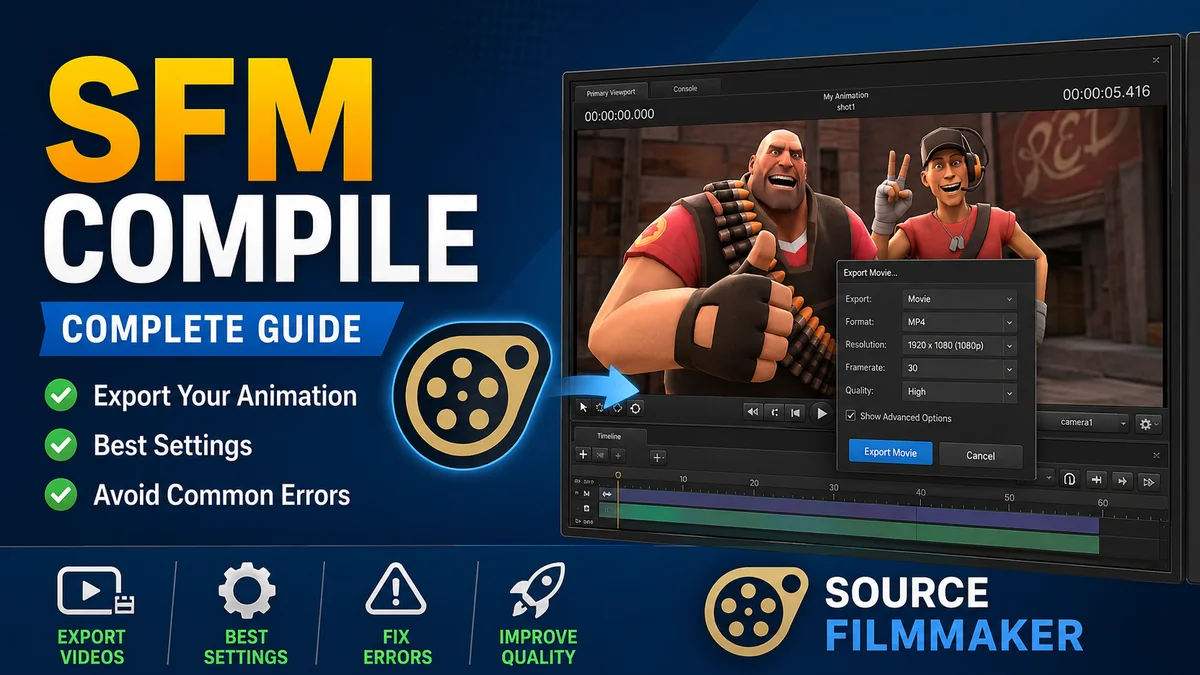
SFM Compile is a term commonly associated with Source Filmmaker (SFM), a powerful tool used to create animated videos, scenes, and visual content. For creators who work with SFM, understanding the compiling process can be important when preparing models, materials, animations, or other assets for use inside the software.
Whether you are new to Source Filmmaker or already have experience creating animated scenes, learning how SFM Compile works can make your workflow more organized and efficient.
What Is SFM Compile?
SFM Compile generally refers to the process of preparing and converting certain assets so they can be properly recognized and used within Source Filmmaker. Depending on the type of content being created, compiling may involve models, textures, materials, or other files used by the Source engine.
Source Filmmaker relies on specific file formats and folder structures. If an asset has not been prepared correctly, it may not appear properly in the program or could display missing textures and other errors.
Why Is SFM Compile Important?
Compiling assets correctly can help creators avoid common problems during production. Properly prepared files are more likely to work as expected when imported into an SFM project.
Some important benefits include:
- Better compatibility with SFM
- Proper model and texture recognition
- Fewer missing-file errors
- More organized project files
- Smoother animation and rendering workflows
For creators working with custom assets, understanding the compilation process can save time and reduce troubleshooting.
How Does the SFM Compile Process Work?
The exact process depends on the type of asset being prepared. A typical workflow involves creating or editing the source files, organizing them correctly, converting them into the required formats, and placing the resulting files in the appropriate SFM directories.
After compiling, the asset can usually be tested inside Source Filmmaker. If something does not appear correctly, the creator can check file paths, materials, textures, and configuration settings.
Common SFM Compile Problems
New users can encounter several issues when compiling or importing custom content. Missing textures are one of the most common problems. This can happen when texture files are stored in the wrong location or when the compiled material references an incorrect path.
Other possible problems include:
- Models not appearing in SFM
- Incorrect textures or materials
- Broken animations
- Incorrect file paths
- Compilation errors
- Assets appearing with unusual visual effects
Carefully checking the original files and directory structure can help identify the cause of these problems.
Tips for Better SFM Compilation
A few simple practices can make the process easier. First, keep your project files organized and use consistent naming conventions. This makes it easier to locate models, textures, materials, and other assets.
It is also useful to test an asset after compiling it rather than waiting until the entire project is finished. Early testing helps identify problems before they affect a larger animation.
Keeping backups of original files is another useful practice. If an edited or compiled version does not work correctly, you can return to the original files and try again.
SFM Compile for Custom Content
One of the major advantages of Source Filmmaker is its support for custom content. Creators can work with different models, environments, materials, and other resources to build unique scenes.
For custom content to work correctly, however, the files need to follow the requirements of the Source engine. This is where understanding SFM Compile becomes particularly useful.
Creators who regularly develop custom assets can benefit from learning how file formats, materials, textures, and model compilation work together.
Conclusion
SFM Compile is an important concept for anyone working with custom content in Source Filmmaker. Understanding how assets are prepared, compiled, organized, and tested can help creators build better projects while avoiding common technical problems.
Whether you are creating simple animations or complex cinematic scenes, learning the basics of SFM compilation can improve your overall workflow and make working with custom assets much easier.
