

How Do Brushes Affect the Stone’s Path in Olympic Curling? chess on ice,” the game requires precision, teamwork, and a deep understanding of how stones move across the ice. One of the most recognizable aspects of curling is the vigorous sweeping performed by players using specialized brushes. To many spectators, it may seem like the sweepers are simply cleaning the ice, but their actions have a significant impact on the stone’s path.
In this article, we’ll explore how brushes affect the stone’s movement in Olympic curling, the science behind sweeping, and why it plays such a critical role in the game.
Understanding the Basics of Curling
Before discussing brushes, it’s important to understand the basics of curling.
In curling, players slide heavy granite stones across a sheet of ice toward a target area called the “house.” Each team aims to place its stones closer to the center of the target than the opposing team. The stones do not travel in a perfectly straight line. Instead, they naturally curve, or “curl,” as they move down the ice.
This curling motion creates opportunities for strategic shot-making, but it also introduces complexity. That’s where sweeping becomes essential.
What Are Curling Brushes?
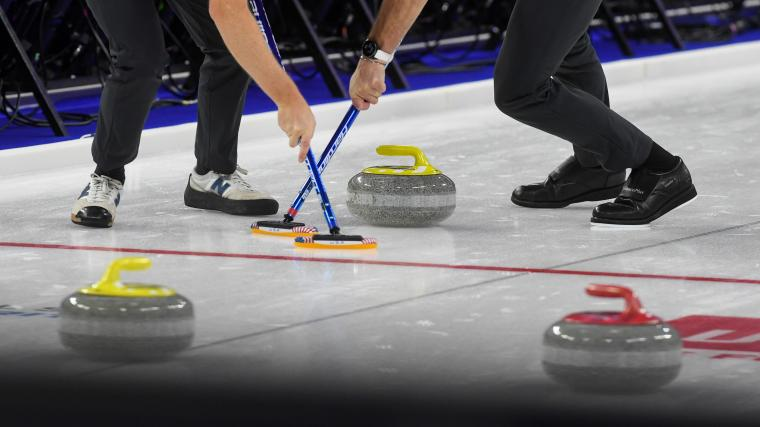
Curling brushes are specialized tools designed to sweep the ice in front of a moving stone. Modern brushes feature lightweight handles made from materials such as carbon fiber and heads covered with specially engineered fabrics.
The brush is not intended to push or pull the stone directly. Instead, it influences the ice surface ahead of the stone, affecting how the stone interacts with the ice.
The Science Behind Sweeping
When curlers sweep vigorously in front of a moving stone, they generate friction between the brush and the ice. This friction creates a small amount of heat.
Although the temperature increase is minimal, it is enough to slightly alter the ice surface. Curling ice is covered with tiny droplets of frozen water known as “pebbles.” These pebbles reduce the contact area between the stone and the ice.
Sweeping smooths these pebbles and temporarily changes the ice conditions, allowing the stone to travel more efficiently.
How Sweeping Changes the Stone’s Distance
One of the primary effects of brushing is increasing the distance the stone travels.
When sweepers reduce friction between the stone and the ice, the stone loses speed more slowly. As a result, it can travel several feet farther than it would without sweeping.
This ability allows teams to make real-time adjustments. If a delivered stone appears to be slowing down too quickly, sweepers can increase their effort to help the stone reach its intended destination.
How Sweeping Affects the Stone’s Curl
In addition to affecting distance, brushing can influence how much a stone curls.
Normally, a curling stone gradually curves as it moves down the sheet. However, when players sweep, they reduce the stone’s tendency to curl.
Because the ice surface becomes smoother, the stone experiences less lateral friction, causing it to follow a straighter path.
This gives teams greater control over shot placement. If a stone appears to be curling too much, sweepers can intervene to keep it on a desired line.
Directional Sweeping in Modern Curling
Advancements in brush technology and sweeping techniques have introduced the concept of directional sweeping.
Rather than sweeping evenly across the stone’s entire path, players can apply pressure in specific directions. This technique allows them to subtly influence the amount and direction of curl.
Directional sweeping became a major topic of discussion in competitive curling because it provided players with greater control than previously thought possible. As a result, governing bodies introduced regulations regarding brush materials and equipment standards.
Why Team Communication Matters
Sweeping is not simply about brushing as hard as possible. It requires constant communication among teammates.
The skip, who serves as the team’s strategist, observes the stone’s trajectory and calls for sweeping when necessary. Sweepers must react instantly and adjust their effort based on the stone’s speed, line, and target location.
Successful teams develop excellent communication skills, ensuring that every sweep contributes to the desired outcome.
Physical Demands of Sweeping
Many people underestimate the athleticism involved in curling. Sweeping is physically demanding and requires strength, endurance, and coordination.
Elite curlers can exert significant downward force on their brushes while maintaining rapid sweeping motions. During a match, players may sweep repeatedly for several hours, making physical fitness an important component of success.
Olympic athletes spend considerable time training their upper-body strength, cardiovascular endurance, and sweeping technique.
Evolution of Curling Brush Technology
Curling brushes have evolved significantly over the years.
Traditional brushes often featured corn straw or horsehair heads. Modern Olympic brushes use advanced synthetic fabrics designed to maximize effectiveness while adhering to competition regulations.
Research into brush materials has led to innovations that improve durability, consistency, and performance. However, governing organizations closely monitor technological developments to ensure that skill remains the primary factor in competition.
Rules Governing Sweeping
The World Curling Federation has established rules regarding sweeping techniques and equipment.
Players may sweep only in front of their own stone until it crosses the tee line. After that point, both teams may sweep according to the rules.
Equipment regulations help maintain fairness by limiting the influence of brush technology. These standards ensure that matches are decided by athletic ability and strategy rather than equipment advantages.
Common Misconceptions About Curling Brushes
Sweeping Does Not Push the Stone
A common misconception is that sweepers physically push the stone forward. In reality, brushes never touch the stone. They only alter the ice surface ahead of it.
More Sweeping Is Not Always Better
Excessive sweeping can sometimes cause a stone to travel too far or remain too straight. Effective sweeping requires judgment and precision.
Sweeping Requires Skill
Professional sweepers are highly trained athletes. Proper technique, timing, and communication are crucial for achieving the desired effect.
Why Sweeping Is So Important in Olympic Curling
At the Olympic level, matches are often decided by inches. The ability to slightly extend a stone’s distance or reduce its curl can mean the difference between winning and losing.
Sweeping gives teams a way to influence the outcome of a shot after the stone has been released. This dynamic aspect of the sport adds excitement, strategy, and teamwork.
Without brushing, curlers would have far less control over their shots, making the game significantly more difficult and less strategic.
Conclusion
Brushes play a vital role in Olympic curling by affecting both the distance and direction of a moving stone. Through vigorous sweeping, players reduce friction, smooth the ice surface, and help the stone travel farther while limiting its natural curl. Modern techniques and advanced equipment have made sweeping an even more important aspect of the sport, requiring exceptional skill, communication, and athleticism.
The next time you watch an Olympic curling match, pay close attention to the sweepers. Their efforts are not just a dramatic display of energy—they are a crucial part of the strategy that can determine the outcome of every shot.
FAQs
Do curling brushes make the stone go faster?
Sweeping reduces friction on the ice, helping the stone maintain its speed and travel farther.
Can sweepers change the direction of a curling stone?
They can influence the amount of curl by sweeping, which helps the stone follow a straighter path.
Why do Olympic curlers sweep so aggressively?
Aggressive sweeping generates more frictional heat, improving the stone’s travel distance and line control.
Do brushes touch the curling stone?
Brushes only contact the ice surface in front of the moving stone.
Is sweeping physically demanding?
Olympic curlers must generate significant downward force and maintain rapid movements, making sweeping a highly athletic activity.
